
20 Fun Facts About Bolivia (From Local Guides)
Bolivia is one of the most surprising countries in South America — and one of the least known. Here are 20 fun facts our guides love to share with travelers, from the world's largest salt flat to a navy without a sea. Some are famous; others you will only hear from people who live here.
Nature and geography
1. It has the largest salt flat on Earth
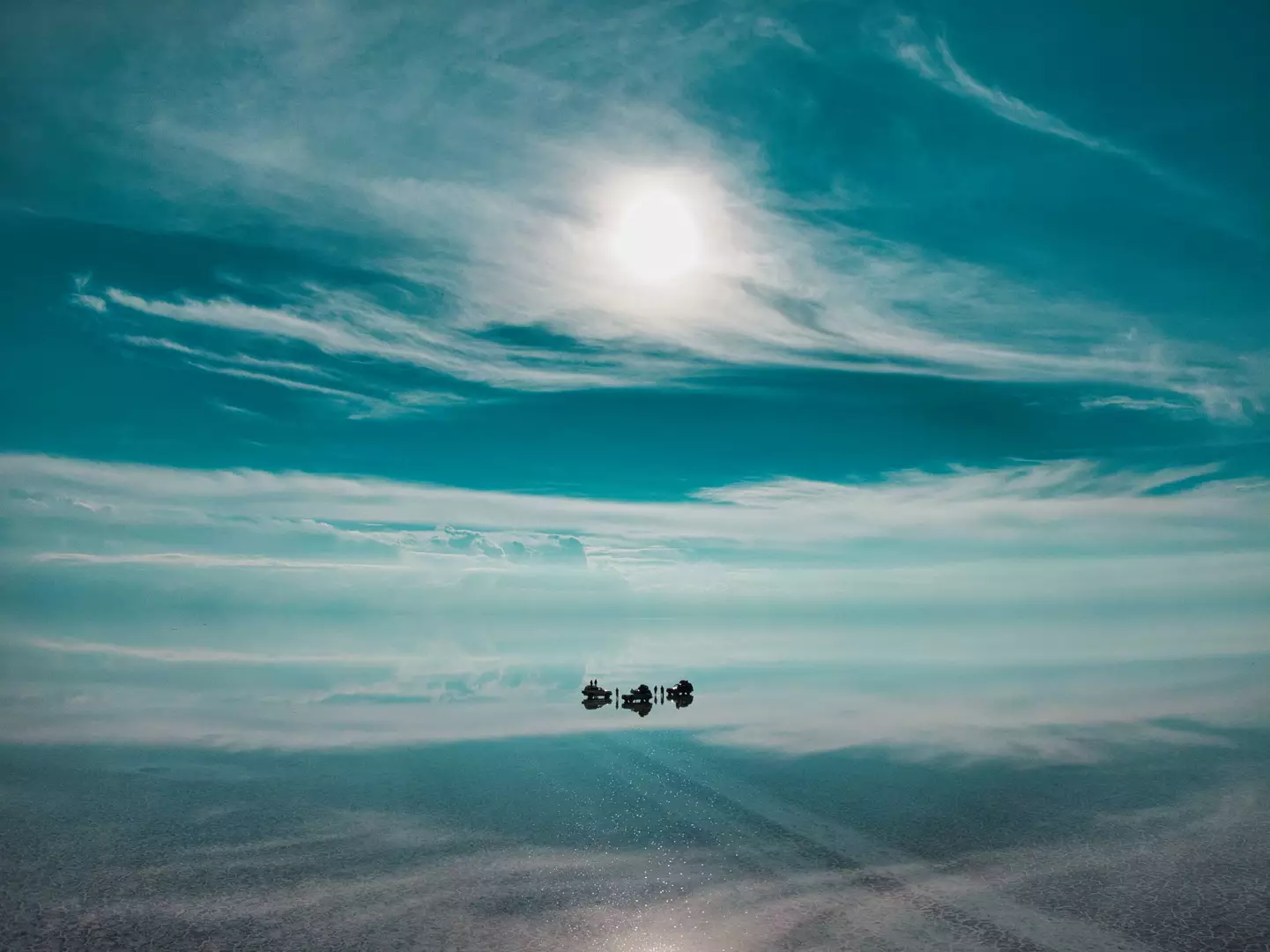
The Salar de Uyuni covers more than 10,500 square kilometers. In the rainy season a thin layer of water turns it into a giant mirror that reflects the sky. It is also incredibly flat: across more than 50 kilometers, the highest and lowest points differ by only about 77 centimeters. That is why NASA scientists used it to check and calibrate the laser altimeter of the ICESat satellite, which measures the polar ice sheets. The precise GPS map made of the salt flat for that work turned it into a reference site for satellite altimeters, and the more accurate ICESat data has been used by researchers around the world to study ice and climate change. Plan your visit with our Salar de Uyuni travel guide.
2. The salt flat hides a treasure for your phone
Under the white crust lies one of the largest lithium reserves in the world — the same metal used in the batteries of phones and electric cars.
3. It shares a sacred lake with Peru
Lake Titicaca sits at about 3,810 meters and is often called the highest navigable lake in the world. In Andean tradition, it is the birthplace of the sun. Which side should you visit? Read Lake Titicaca: Bolivia or Peru side?
4. It has its own pink river dolphin
The rivers of the Bolivian Amazon are home to the bufeo, the Bolivian river dolphin (Inia boliviensis). For years it was considered the same as the Amazon river dolphin, but many scientists now recognize it as its own species. You can see them on a pampas tour from Rurrenabaque.
5. It goes from Amazon jungle to glaciers
Bolivia stretches from tropical lowlands a few hundred meters above sea level to snow-capped peaks above 6,000 meters. Madidi National Park alone is considered one of the most biodiverse protected areas on the planet. See how to combine them in our Bolivia itineraries for 7, 10 and 14 days.
6. It once had the highest ski slope in the world
Chacaltaya, near La Paz, was famous for its ski run at more than 5,000 meters. Its glacier had practically disappeared by around 2009 — today it is a striking reminder of climate change, and still a great high-altitude viewpoint.
7. It has thousands of dinosaur footprints on a wall
At Cal Orck'o, near Sucre, a nearly vertical limestone wall preserves thousands of dinosaur tracks — one of the largest collections of dinosaur footprints in the world. Millions of years ago, the wall was a flat lakeshore.
Cities and altitude
8. It has two capitals
Sucre is the constitutional capital, while La Paz is the seat of government. Sucre is named after Antonio José de Sucre, one of the heroes of independence.
9. La Paz is the highest seat of government in the world
At around 3,600 meters, you will feel it on the first flight of stairs. Read our tips on altitude sickness in Bolivia.
10. El Alto is even higher
Right above La Paz, the city of El Alto sits at about 4,150 meters, making it one of the highest major cities on Earth. The international airport is there, so for most travelers it is the very first stop.
11. Its "subway" flies
Mi Teleférico, the cable car network of La Paz and El Alto, is the highest and longest urban cable car system in the world. Locals use it every day to go to work — and it gives you the best views of the city for the price of a bus ticket.
12. Zebras direct the traffic
In La Paz, young people dressed in full zebra costumes help pedestrians cross the street and teach drivers to respect crosswalks. The program began in 2001 and has become one of the city's most loved symbols.
History and politics
13. The country is named after Simón Bolívar
Bolivia became independent in 1825 and took its name from Simón Bolívar, the leader of South America's independence wars.
14. It has a navy, but no sea
Bolivia lost its coastline to Chile in the War of the Pacific (1879–1884), and is one of only two landlocked countries in South America, together with Paraguay. Even so, it keeps a navy that trains on Lake Titicaca and the Amazon rivers, and every March 23 the country commemorates the Día del Mar (Day of the Sea).
15. Its coins carry two different names of the country
Some 2-boliviano coins say "República de Bolivia", others "Estado Plurinacional de Bolivia" — and both are in circulation. Read the story in Two Coins, Two Bolivias.
16. Two families of banknotes live together
Old and new banknotes of the same value, with completely different heroes, are used side by side every day. Find out why in Two Sets of Banknotes, One Country.
17. It has two official flags
Besides the red, yellow and green tricolor, the 2009 constitution recognizes the wiphala — a colorful checkered flag of the Andean peoples — as a national symbol. You will see both flying side by side on government buildings.
Culture and people
18. It has 37 official languages
The constitution recognizes Spanish and 36 Indigenous languages as official, including Quechua, Aymara and Guaraní. Many people you meet in the Andes grew up speaking Aymara or Quechua at home.
19. There is a market for witches
In La Paz, the Witches' Market (Mercado de las Brujas) sells medicinal herbs, amulets and offerings for the Pachamama, or Mother Earth. Every year, during the Alasitas fair, paceños also buy miniature versions of what they wish for — houses, cars, money — and have them blessed so the wishes come true. The ritual is recognized by UNESCO as Intangible Cultural Heritage.
20. Cholitas wrestle — and climb mountains
Indigenous women in bowler hats and layered pollera skirts have become famous for the cholitas luchadoras wrestling shows in El Alto. Others, the cholitas escaladoras, climb some of the highest peaks in the Andes in their traditional dress. Both are powerful symbols of women who were once discriminated against and are now proudly visible.
Sources and further reading: Wikipedia: Bolivia, Wikipedia: Salar de Uyuni.
Want to see it for yourself?
Fun facts are great, but Bolivia is better in person. Our local guides will show you the salt flats, the lakes, the markets and the stories behind them. Explore tours like Bolivia Explorer — 8 Days or Bolivia Elevates — 10 Days, see all our tours, or contact us to plan your trip.
